 |
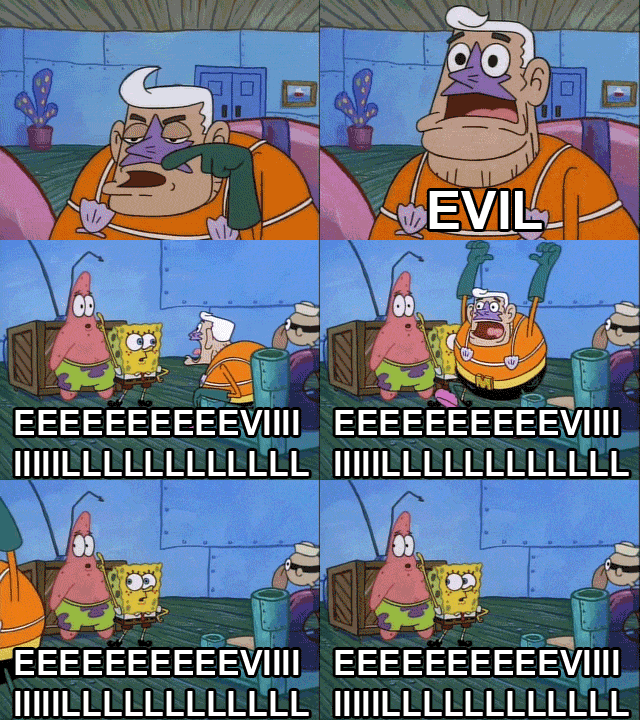
| https://38.media.tumblr.com/761e20abdb9e468c3accfb3603720562/tumblr_inline_ncsp86wSid1sxlyin.gif |
When we think of evil, we automatically envision the worst of the worst. So why is it that someone who is good would choose evil? Maybe they believed it would be easy. Maybe they believed it wouldn't lead to more evil. Maybe they did not choose evil. Maybe someone else made that choice for them and they were too weak to argue.
In Macbeth, it is evident that Macbeth did not take his first step on his own. His step was heavily encouraged by someone very close to him: his wife. The Wyrd Sister say to Macbeth, "All hail, Macbeth , that shalt be King hereafter!" (Macbeth, 1.3). Of course, Macbeth had to tell his wife about this amazing prophecy and, once he writes to her, we hear Lady Macbeth's response. She wants more than anything for Macbeth to get the power he has been told he will receive. Macbeth wants this power as well, but he wishes to hang onto his morals and refuses to kill King Duncan... at first.
By the end of Act I, Macbeth is already beginning to take his first steps toward evil. His first step isn't killing Duncan, his first step is deciding to kill Duncan. However, as I already stated, Macbeth does not make this decision on his own. Lady Macbeth is there doing all she can to convince Macbeth to kill Duncan. She even says, "I would, while it was smiling in my face,/ Have plucked my nipple from his boneless gums/ And dashed the brains out" (Macbeth, 1.7). Having your own wife say that she would kill her own child for power makes it easier to think of killing someone unrelated to you for power. At least, that's how Macbeth sees it.
So maybe someone good only becomes evil through other people's persuasion. Still, what happens to these good-turned-evil people? I can only imagine that they don't end up very happy. If you have morals, then I'm sure being evil wouldn't make you feel good. Once again, this is shown through Macbeth as he continues traveling down the road to evil.
Immediately after killing King Duncan, Macbeth feels guilty. He asks, "Will all great Neptune's oceans wash this blood/ Clean from my hand?" (Macbeth, 2.2). Over time, this murder seems to matter less and less to him, until he murders again. This time, he is not the direct murderer, but he calls for the murder to be done. He gives the order for his best friend, Banquo, to be killed. After this, he begins seeing Banquo's ghost and, essentially, he goes insane.
So, to recap, good people don't become evil without a push from someone else, and, once they are evil, they literally go crazy from guilt.

I really like the approach that you took toward this question. It is very easy to say that it is the supernatural that encourages Macbeth to become evil but it truly is Lady M even though she has no direct contact with the supernatural. Then there is the argument that she is influenced by power.
ReplyDelete